

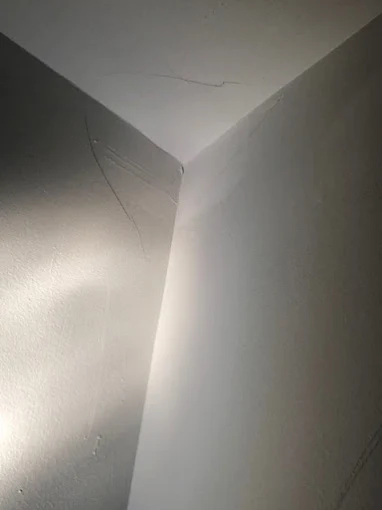
Every November, the same calls start coming in across Edmonton, Sherwood Park, and St. Albert. A homeowner notices a hairline crack running from the corner of a door frame. Small round bumps appear on the ceiling like tiny blisters. A seam between the wall and ceiling opens up in the upstairs hallway. By spring, some of these marks seem to close on their own, only to return the following winter.
If this sounds familiar, you are not alone, and your house is probably not falling apart. Winter drywall cracks and nail pops are among the most common interior issues in Edmonton homes. Understanding why they happen is the first step toward fixing them properly instead of patching the same spot every year.
In this guide, the team at Executive Drywall explains what causes drywall cracks in Edmonton winters, how to tell cosmetic damage from a warning sign, and what a lasting repair actually involves.
Why Edmonton Winters Are So Hard on Drywall
Edmonton sees some of the harshest temperature swings of any major Canadian city. Outdoor temperatures can drop below -30°C for days, then climb toward zero during a mild spell. Meanwhile, the inside of your home stays at about 21°C with furnace air that is extremely dry.
Drywall itself is fairly stable. The problem is the wood framing behind it. Lumber expands and contracts as its moisture content changes, and Edmonton winters pull moisture out of the air fast. When studs, joists and trusses shrink or shift, the rigid gypsum panels attached to them have nowhere to go. The result is stress that shows up at the weakest points: seams, corners, fasteners and openings.
Low indoor humidity
Indoor relative humidity in Edmonton homes often falls below 25% in January. Framing lumber dries out and shrinks slightly across its width. That small movement is enough to pull tape away from a joint or push a screw head through the paper face of the board.
Truss uplift
Truss uplift is one of the most common causes of winter ceiling cracks in newer Edmonton homes. Roof trusses span from one exterior wall to another. In winter, the bottom chord of the truss sits in warm, insulated space while the top chords sit in a cold, often damper attic. The top members absorb moisture and lengthen, which can lift the bottom chord upward by a few millimetres or more.
When the truss lifts, it pulls the ceiling drywall up with it. If that drywall is fastened to an interior partition wall, the joint between wall and ceiling cracks open. In spring, the truss settles back down and the crack often closes. This seasonal cycle is a classic sign of truss uplift rather than structural failure.
Settling and new-build shrinkage
Newer homes in communities like Windermere, The Hamptons or Summerside often show their first cracks during the first two or three winters. Framing lumber continues to dry after construction, and the home settles onto its foundation. Some movement is normal and expected during this period.
Foundation and soil movement
Edmonton’s clay-heavy soils expand when wet and shrink when dry or frozen. Frost heave and seasonal soil changes can move a foundation slightly, which transfers stress up into the walls. These cracks tend to look different from simple shrinkage cracks, as described below.
What Are Nail Pops and Why Do They Appear in Winter?
A nail pop is a small round bump or crack on a wall or ceiling where a fastener has pushed outward. In many cases, the fastener has not moved at all. Instead, the wood stud behind it has shrunk, leaving a tiny gap between the drywall and the framing. When someone bumps the wall or the house flexes, the board moves toward the stud and the fastener head breaks through the finish.
Nail pops are more common in homes built with nails rather than screws, in ceilings, and in rooms with high temperature swings, such as bonus rooms above garages. They are rarely a structural concern, but simply mudding over them almost guarantees they will return.
Common Types of Winter Drywall Cracks
Not every crack means the same thing. Here is how to read what you are seeing.
- Hairline cracks at door and window corners. These run diagonally from the top corners of openings. They usually result from framing shrinkage and normal house movement.
- Wall-to-ceiling cracks. A straight crack where interior walls meet the ceiling, often opening in winter and closing in summer, points strongly to truss uplift.
- Tape seam cracks. A long, straight crack along a joint, sometimes with bubbling or peeling tape, often means the joint was under-filled or poorly bedded during installation.
- Corner bead cracks. Cracks along outside corners usually signal loose or damaged corner bead.
- Stair-step or wide cracks. Cracks wider than about 3 mm, cracks that keep growing, or cracks paired with sticking doors and sloping floors may indicate foundation movement and should be inspected.
When Should You Worry?
Most winter drywall cracks in Edmonton homes are cosmetic. However, call a professional for an assessment if you notice any of the following:
- Cracks wider than a credit card that keep growing month to month
- Doors or windows that suddenly stick or will not latch
- Cracks that appear in both drywall and basement concrete in the same area
- Sagging ceilings or drywall that feels soft or spongy
- Water stains, bubbling paint or a musty smell near the crack
Water stains are especially important. Ice damming on the roof or condensation in the attic can leak into ceilings during winter thaws. In that case, the drywall is a symptom, and the moisture source must be fixed first. Executive Drywall also provides restoration for water-damaged and flooded spaces.
How Professionals Repair Winter Cracks and Nail Pops
A quick skim coat might hide a crack until the next cold snap. A lasting repair addresses why the crack formed.
Repairing nail pops the right way
- Drive a drywall screw about 40 mm from the popped fastener to pull the board tight to the framing.
- Reset or remove the original nail and add a second screw on the opposite side if needed.
- Fill with setting-type compound, sand, apply a second coat, then prime and paint.
Securing the board to the stud is what stops the pop from coming back.
Repairing seam and corner cracks
For a seam crack, the old tape is cut out, the joint is re-bedded with fresh tape, and multiple feathered coats are applied. Cracked corner bead is removed and replaced. Simply adding compound over cracked tape usually fails within a season.
Repairing truss uplift cracks
Truss uplift cracks need a different approach because the movement will happen every year. Common solutions include:
- Removing fasteners from the ceiling within about 400 mm of the partition wall, so the ceiling can float.
- Installing drywall clips that attach the ceiling edge to the top plate without rigid fasteners.
- Using a crown or cove molding attached only to the ceiling, which hides seasonal movement.
These methods let the ceiling move with the truss rather than tearing at the corner.
Matching paint and texture
The final step is often the hardest to get right. Ceiling textures, knockdown finishes and older paint colors can be difficult to blend. Executive Drywall offers so the repair disappears instead of leaving a visible patch.
How to Reduce Drywall Cracks Next Winter
You cannot stop your home from moving, but you can limit how much it moves.
- Keep indoor humidity steady: Aim for 30–35% in deep cold to limit framing shrinkage while avoiding window condensation. A furnace-mounted humidifier helps.
- Avoid big thermostat swings: Dropping the heat dramatically at night or while away causes more expansion and contraction.
- Check attic ventilation and insulation: Balanced attic airflow reduces moisture in truss top chords and helps limit uplift.
- Manage drainage around the foundation: Downspouts that discharge at least 1.5 to 2 metres from the house reduce soil movement.
- Wait before repainting a new build: If your home is new, let it go through at least one full winter before doing major cosmetic repairs.
DIY or Hire a Pro?
A single nail pop in a closet is a fine weekend project. Larger repairs are different. Ceiling cracks, textured surfaces, repeating truss uplift, and multiple rooms require proper tools, setting compounds, and finishing skill. A poor patch is often more visible than the original crack, especially under the low winter light that comes through Edmonton windows.
Hiring an experienced drywall contractor also gives you a second set of eyes. A pro can tell the difference between harmless shrinkage and a sign of moisture or foundation movement that needs attention.
FAQs
Why does my drywall crack every winter in Edmonton?
Dry furnace air shrinks the wood framing behind the drywall, and cold attics can cause trusses to lift. Both create seasonal movement that cracks seams and corners.
Are nail pops a structural problem?
Usually not. Nail pops are typically caused by lumber shrinkage and are cosmetic. Re-securing the board with screws is the lasting fix.
Should I fix drywall cracks in winter or wait until spring?
Cosmetic repairs can be done any time, but truss uplift cracks are best repaired with floating methods so they do not reopen. For new homes, waiting until after the first winter is often wise.
How much does drywall crack repair cost in Edmonton?
Cost depends on the number of areas, ceiling height, texture matching and paint. A free on-site estimate is the most accurate way to price your repair.
Can humidity really prevent drywall cracks?
It helps. Keeping humidity steady, around 30–35% in winter, reduces how much framing lumber shrinks, which limits cracking and nail pops.
Get Your Walls Ready for Winter with Executive Drywall
For more than 20 years, Executive Drywall has helped homeowners and businesses across Edmonton, Sherwood Park and St. Albert with drywall installation, repair, texture and finishing. Our team diagnoses why a crack formed, fixes the cause, and finishes the surface so it blends seamlessly with the rest of your home.
Don’t keep patching the same crack every winter. Call Executive Drywall at 780-444-2647 or request your free, no-obligation estimate today.