 Skip to content

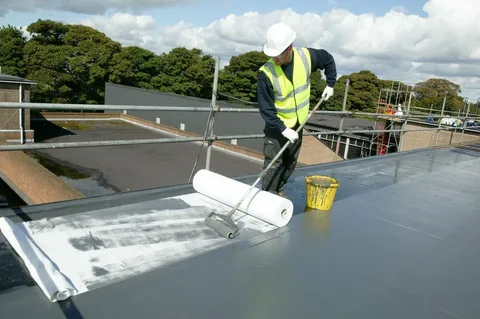
Fire and water do their worst damage inside walls and ceilings, where nobody looks until something has already gone wrong. I think that is why both get treated as afterthoughts. Paint colour gets a week of debate. The board behind the paint gets none.
That is backwards. The choice of board, sealant and membrane decides how long a fire stays in one room and whether a slow leak becomes a mould problem. Both are engineered systems, and both fail at their weakest detail.
I wrote this guide for Edmonton homeowners and small commercial owners planning a basement, bathroom, suite or tenant fit-out. It explains how each kind of protection works, which materials do what, what the code asks for, and how to judge a contractor.
How Fire Protection Works Inside a Wall
Fireproofing a building does not make it unable to burn. It buys time by keeping fire and smoke in the room where they started, so people can get out and firefighters can get in. Builders call this passive fire protection, and it has three working parts.
-
Gypsum board
Gypsum holds water bound in its crystals. In a fire that water is driven off as steam, which keeps the far side of the board cool until the core is spent. Type X board adds glass fibres so the core holds together longer.
-
Rated assemblies
A fire rating belongs to a whole tested assembly: studs, board, fasteners, spacing and joints together. Swap one part and the rating no longer applies.
-
Firestopping
Every pipe, cable and duct that passes through a rated wall leaves a hole. Firestop sealants and collars close those holes, and many of them swell when heated.
Structural steel is a separate case. Steel loses strength quickly as it heats, so exposed members are protected with sprayed coatings or intumescent paint. Executive Drywall describes its own fireproofing as applying specialized materials and coatings to prevent fire spread.
How Waterproofing Works
Waterproofing is a continuous barrier, and it only works if it has no gaps. Water arrives three ways, and each one needs a different answer.
-
Liquid water
Showers, tub surrounds and floors around drains get wet directly. They need a membrane, either a sheet or a liquid that cures into a film, lapped at every seam and sealed at every corner and fixture.
-
Vapour
Warm indoor air carries moisture into cold wall cavities, where it condenses. A vapour barrier on the warm side and proper ventilation deal with this.
-
Ground moisture
Concrete basement walls and slabs pass moisture from the soil. Finished walls need a gap or an insulation layer that tolerates damp, so the framing and board never sit wet.
The most common mistake I see described is treating moisture-resistant board as waterproof. It is not. Green board slows absorption. Cement board survives being wet but lets water through. In a sher, the membrane does the waterproofing and the board only supports it.
Executive Drywall lists waterproofing for bathrooms, basements and other moisture-prone areas, which are the three places where this distinction matters most.

Why Edmonton Raises the Stakes
Edmonton’s climate and housing stock push both risks higher than a generic guide assumes.
Long, cold winters create a large temperature gap between indoor air and exterior walls, which drives condensation inside poorly sealed cavities. Spring snowmelt then loads the soil around foundations with water just as the ground thaws. Basements take the brunt of both.
The city also has a large and growing number of basement suites. A suite puts a second household, a second kitchen and often a shared furnace room under one roof. That is the situation fire separation exists for.
Materials Compared
Each board and membrane does one job well, and most failures come from asking a product to do a job it was not made for.
| Material | What it does | Where it belongs | What it does not do |
| Standard gypsum board | Basic fire resistance; smooth finish | Dry rooms; smoke-tight barriers where code allows | Tolerate repeated wetting |
| Type X gypsum board | Longer fire endurance in rated assemblies | Suite separations, furnace rooms, garages, corridors | Earn a rating on its own, outside a tested assembly |
| Moisture-resistant board | Slows moisture absorption | Bathroom walls outside the shower, laundry rooms | Waterproof a shower |
| Cement board | Stays stable when wet | Tile backer in showers and tub surrounds | Stop water without a membrane |
| Sheet or liquid membrane | Blocks liquid water | Showers, wet floors, around drains | Work if seams and corners are skipped |
| Firestop sealant | Seals penetrations; many types swell in heat | Any pipe, cable or duct through a rated wall | Replace missing board |
Steel studs deserve a mention too. They do not burn or rot, which is why Executive Drywall cites steel framing’s resistance to fire and pests.
What the Code Requires in Edmonton
A secondary suite in Edmonton needs a building permit, and the fire separation rules are specific. The City’s Secondary Suite Design Guide, dated January 31, 2025 and based on the National Building Code 2023 Alberta Edition, sets out the following.
-
Barrier
A continuous smoke-tight barrier of at least 12.7 mm (½ in) gypsum board must separate the suite from the main dwelling.
-
Where it goes
On the underside of the floor above, on both sides of shared walls, around shared exits, around storage and laundry rooms, and around any room with a fuel-fired appliance.
-
Doors
Doors in the barrier must be solid-core wood at least 45 mm thick, with a self-closer.
-
Smoke alarms
Hardwired and interconnected through the whole house, in every bedroom, hallway and common or service room.
The word that matters is continuous. One unsealed duct chase defeats the barrier. Commercial spaces follow different, stricter rules, so confirm requirements with the City before work starts.
How to Choose a Contractor
Both kinds of work get covered up, so the questions you ask before the job matter more than the look of the finished wall.
- Which tested assembly are you building, and can I see the listing?
- Who firestops the plumbing and electrical penetrations, and when?
- Which membrane system goes in the shower, and will you flood-test it before tile?
- How will the basement walls handle moisture from the concrete?
- Who books the inspections, and can I see the work before it is closed in?
- What does the written warranty cover, and for how long?
I would also ask for photos taken before boarding and before tiling. They cost nothing and they are the only record of the parts that count.
Executive Drywall handles residential and commercial projects in Edmonton, covering steel stud framing, drywall, insulation, soundproofing, fireproofing and waterproofing. The company says it assigns a dedicated manager to each project and offers free estimates, typically arranged within one business day. Its warranties vary by service and generally cover defects in materials and workmanship. Having one contractor do the framing, board and sealing reduces the gaps between trades, which is where continuity usually breaks.
The Bottom Line
Fire protection and waterproofing are both about continuity. A rated wall with an open pipe hole is not rated, and a shower with one unsealed corner is not waterproof. Choose materials for the job each one does, insist on seeing the work before it is covered, and hire someone who can explain the system, not just the finish.
FAQs
1. Is Fire-Rated Drywall Actually Fireproof?
No. It resists fire for longer than standard board, and only as part of a tested assembly. Its job is to slow the spread of fire and smoke long enough for people to leave.
2. Is Green Board Enough for a Shower?
No. Moisture-resistant board slows absorption but is not waterproof. A shower needs a sheet or liquid membrane over a suitable backer, sealed at every seam, corner and fixture.
3. Do I Need a Permit for a Basement Suite in Edmonton?
Yes. The City requires a building permit for secondary suite construction, and trade permits depend on the scope of work. The suite must also meet the smoke-tight barrier, door and smoke alarm rules.
4. Can Fireproofing and Waterproofing Be Added to an Existing Building?
Usually, yes. Penetrations can be firestopped, board can be upgraded, and steel can be coated. Waterproofing a finished shower or basement wall normally means removing the surface to reach the layer behind it.
5. How Much Do These Services Cost?
It depends on the area, the assembly required and how much existing finish has to come out. I have no reliable single figure. Executive Drywall offers free estimates, so ask for an itemized quote and compare it line by line with others.
